
Losing a family member is an unimaginable hardship, particularly when their passing was preventable. If a loved one died due to someone else’s carelessness, you may be seeking justice through a legal claim. At Paul Robinson Law, P.L.L.C., we help families in Raleigh, Apex, Cary, and across North Carolina navigate these difficult waters.
Understanding how to prove wrongful death is the first step toward holding the responsible parties accountable. In North Carolina, these cases are governed by specific statutes that dictate who can file a claim and what evidence is required to succeed.
In North Carolina, a wrongful death action is a civil lawsuit filed against a person or entity responsible for a death. According to N.C.G.S. § 28A-18-2, a claim exists:
"When the death of a person is caused by a wrongful act, neglect or default of another, such as would, if the injured person had lived, have entitled the injured person to an action for damages therefor..."
Essentially, if the deceased person would have been able to file a personal injury lawsuit had they survived, the estate can likely pursue a wrongful death claim.
A common question families ask is who can sue for wrongful death? Unlike some states where any close relative can file, North Carolina law is very specific.
Under N.C.G.S. § 28A-18-2(a), the action must be brought by the personal representative or collector of the decedent. This is usually the person named as the executor in a will or an administrator appointed by the court if there was no will. While the personal representative files the suit, any recovery is distributed to the heirs (such as a spouse or children) according to the Intestate Succession Act.
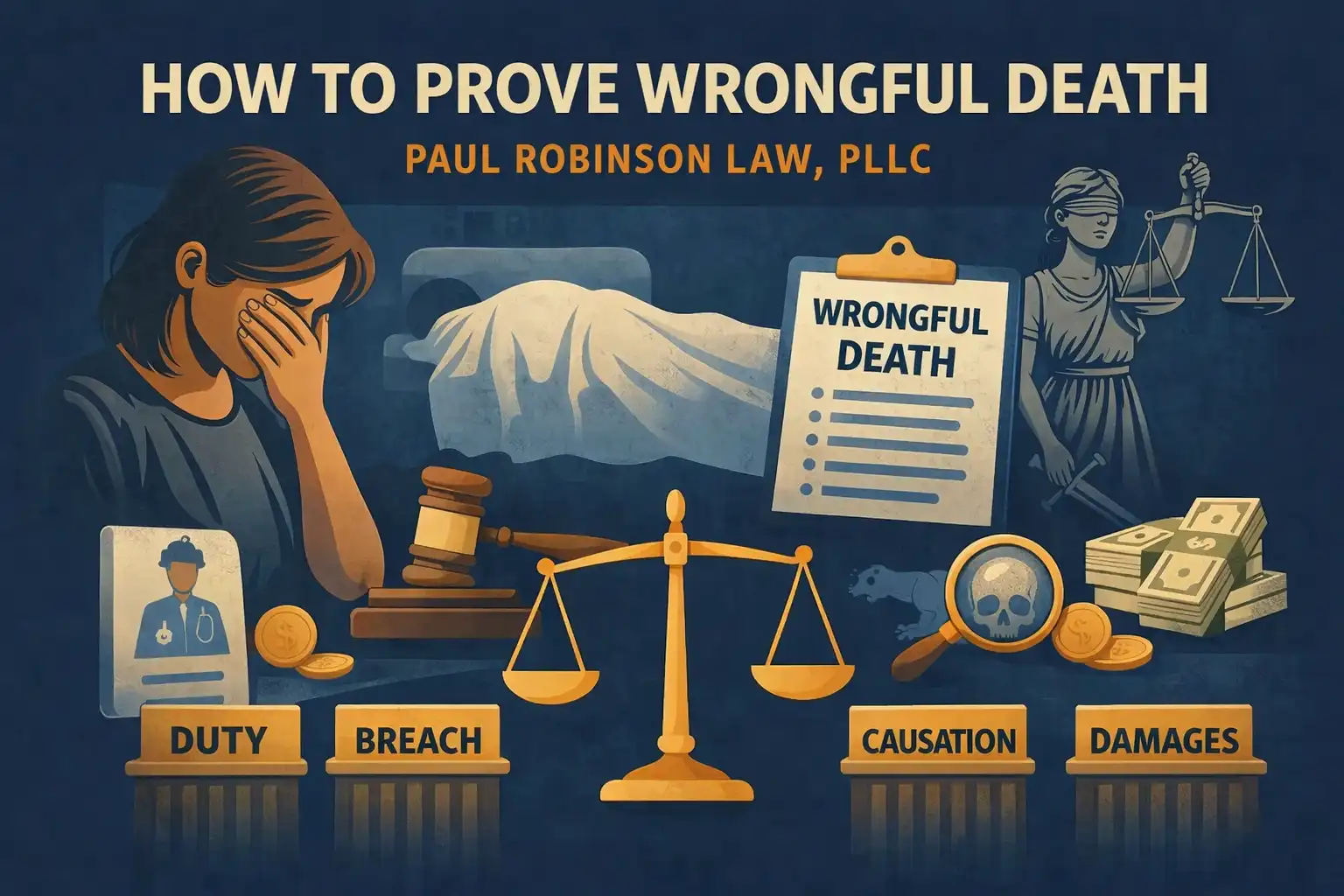
To win a case, your legal team must establish liability by a "preponderance of the evidence." This involves meeting the 4 things to prove negligence:
North Carolina law allows for the recovery of both economic and non-economic damages. Per N.C.G.S. § 28A-18-2(b), recoverable damages include:
What is a typical amount of pain and suffering? There is no "standard" check-list amount. Compensation varies wildly based on the age of the deceased, their relationship with survivors, and the circumstances of the accident. A skilled attorney will use expert testimony to quantify these deeply personal losses.
The odds depend heavily on the strength of the evidence. Because North Carolina follows the "contributory negligence" rule, if the deceased was even 1% at fault for the accident, the claim can be barred. This makes having a thorough investigation by a Raleigh wrongful death lawyer essential.
If the jury finds in favor of the defendant, the estate receives no compensation. This is why most wrongful death attorneys work on a contingency fee basis—meaning you pay no legal fees unless we win your case.
Often, the "loss of society and companionship" or the decedent's own pain and suffering before death are the most difficult to prove. We use journals, witness testimony, and medical experts to paint a picture of the decedent's life and the impact of their absence.
Proving a wrongful death requires prompt action to preserve evidence and meet strict filing deadlines. At Paul Robinson Law, P.L.L.C., we provide the compassionate, aggressive representation North Carolina families need during their darkest hours.
Contact us today for a free, confidential consultation. Let us handle the legal burden so you can focus on your family.
Call Us At
919-438-0065
105 S Ellington St, Clayton, NC 27520
124 St Marys St Ste 201, Raleigh, NC 27605
800 W Williams St #250 Apex, NC 27502