
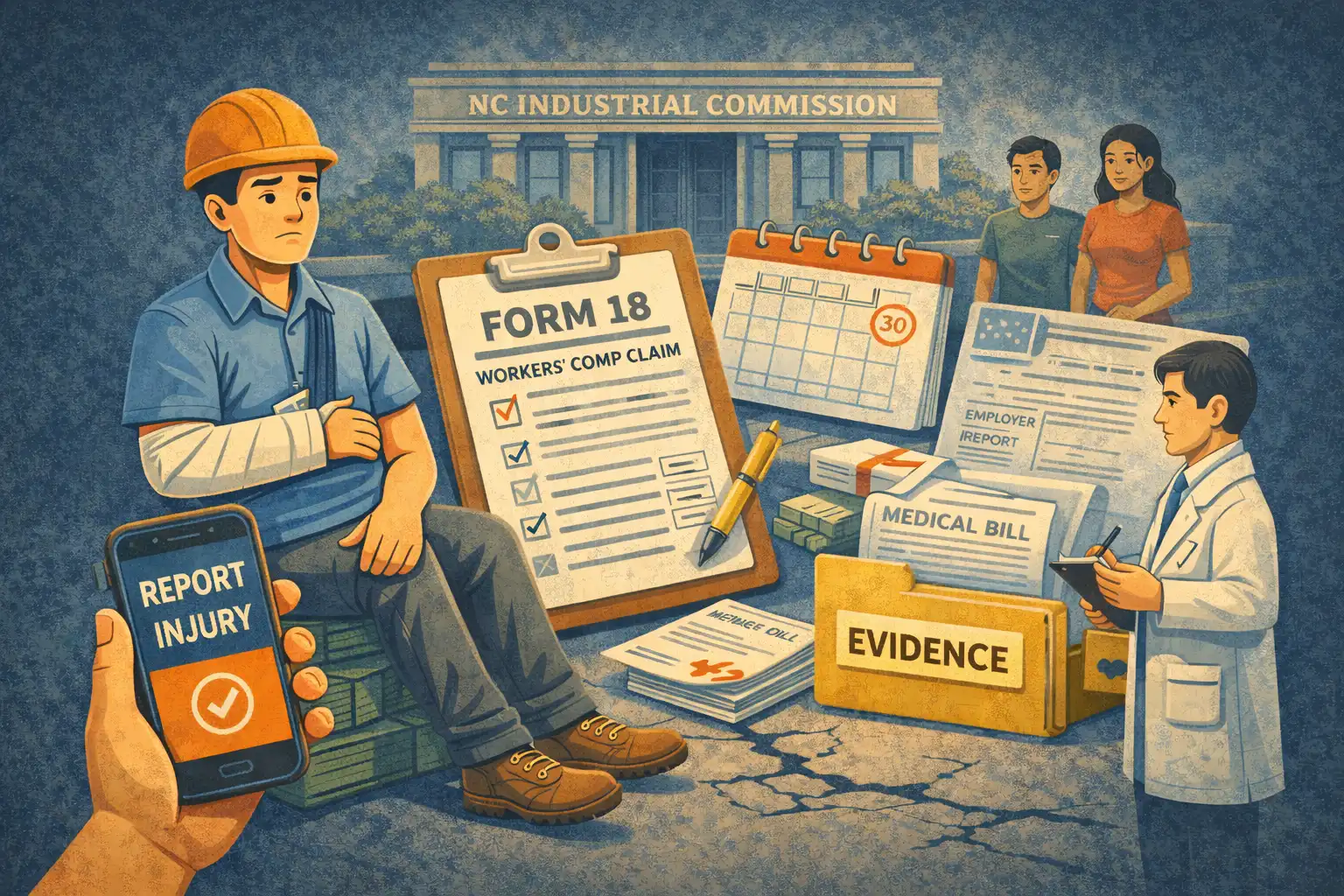
If you have been injured on the job, knowing how to apply for workers compensation correctly can be the difference between receiving benefits and having your claim denied. In North Carolina, the workers compensation process is a legal system designed to provide medical care and wage replacement, but it requires strict adherence to the rules set by the North Carolina Industrial Commission.
At Paul Robinson Law, P.L.L.C., we represent hard-working people throughout the Triangle. Whether you were hurt at a construction site in Apex or an office in Raleigh, here is exactly how to file a workers comp claim to ensure you are protected.
Many injured workers wonder, "How do you get workers comp?" It isn't automatic. You must take proactive steps to initiate your claim.
To successfully file a workman's comp claim, you need more than just a description of the event. You need a body of evidence that proves the injury arose out of and in the course of your employment.
The most frequent claims involve overexertion (lifting or pulling), slips, trips, and falls. In North Carolina, you must be able to show that an "accident,” an unlooked-for or untoward event, has occurred. Simply "hurting your back while lifting" may be denied if it was part of your normal work routine; you must show something changed, such as a trip or a sudden shift in weight.
Benefits typically do not cover injuries sustained while intoxicated, injuries resulting from willful intention to hurt oneself or others, or injuries that occur during a commute to or from work (with specific exceptions).
While payouts vary based on the severity of the disability, North Carolina law generally provides for two-thirds (66.67%) of your average weekly wage, subject to a maximum cap set annually by the state.
While you have 30 days to notify your employer, you have a two-year statute of limitations to formally file your claim (Form 18) with the North Carolina Industrial Commission. According to state statistics, thousands of claims are denied annually simply because workers relied on their employer’s verbal promises and failed to file the proper state forms.
The workers compensation process is often adversarial. Insurance companies have teams of lawyers working to minimize your payout. You shouldn’t have to fight them alone.
If you are unsure of your next steps, we have resources to help you understand if workers' compensation is taxable and how long it takes to settle a workers' compensation case.
If you’ve been hurt at work, don’t wait. Contact Paul Robinson Law, P.L.L.C. today for a free consultation. We’ll help you navigate the paperwork so you can focus on getting better.
Call Us At
919-438-0065
105 S Ellington St, Clayton, NC 27520
124 St Marys St Ste 201, Raleigh, NC 27605
800 W Williams St #250 Apex, NC 27502